

The best patellar tendonitis exercises load the tendon on purpose, starting with pain calming holds and building to heavy, slow strength work and then jumping. Rest alone rarely fixes the ache below your kneecap, because a tendon heals by adapting to the right amount of load.
If you jump, run, lift, or play pickleball, that sore spot just under the kneecap is telling you the tendon cannot handle your current training. The good news is that tendons respond well to a smart plan, and most people recover without injections or surgery.
In this guide, we explain what patellar tendonitis is and which exercises help. You will also learn how to tell good pain from bad pain and how long recovery takes. You will also see a phase by phase timeline so you know exactly where you are and what comes next.
What Should You Do Today?
- Swap deep squats and jumping for a 45 second wall sit, five times, at a comfortable effort.
- Rate your knee pain from zero to ten during every workout and keep it at three or lower.
- Check your knee the next morning, because a flare the next day means you did too much.
- Cut your jumping and sprint volume in half for now instead of stopping all activity.
- Write down which movements hurt so your physical therapist can find the pattern fast.
What Is Patellar Tendonitis and Why Does It Hurt?
Patellar tendonitis is irritation and overload of the thick tendon that connects your kneecap to your shinbone. It usually hurts right at the bottom edge of the kneecap, especially when you jump, land, squat, or climb stairs.
You may also hear it called jumper’s knee or patellar tendinopathy. Most clinicians now prefer tendinopathy. The problem is less about inflammation and more about a tendon that has not kept up with your training.
Is It Tendonitis or Tendinopathy?
The names describe the same sore spot, but the difference matters for treatment. According to the StatPearls review of patellar tendinopathy from the National Library of Medicine, the condition is not inflammatory, so corticosteroid injections should not be used.
That is why icing and waiting often disappoint you. A tendon that is not inflamed does not need endless rest. It needs to be rebuilt with progressive loading.
Who Gets Jumper’s Knee?
Jumper’s knee shows up most in sports with lots of jumping, landing, and quick changes of speed. Think volleyball, basketball, running, CrossFit, and court sports like pickleball and tennis.
The same StatPearls review notes that roughly 45% of elite jumping athletes and up to 14% of recreational jumping athletes deal with patellar tendinopathy symptoms at some point. It also reports higher rates in athletes who train on concrete, at 38% compared with 20% on other surfaces.
What Are the Signs of Patellar Tendonitis?
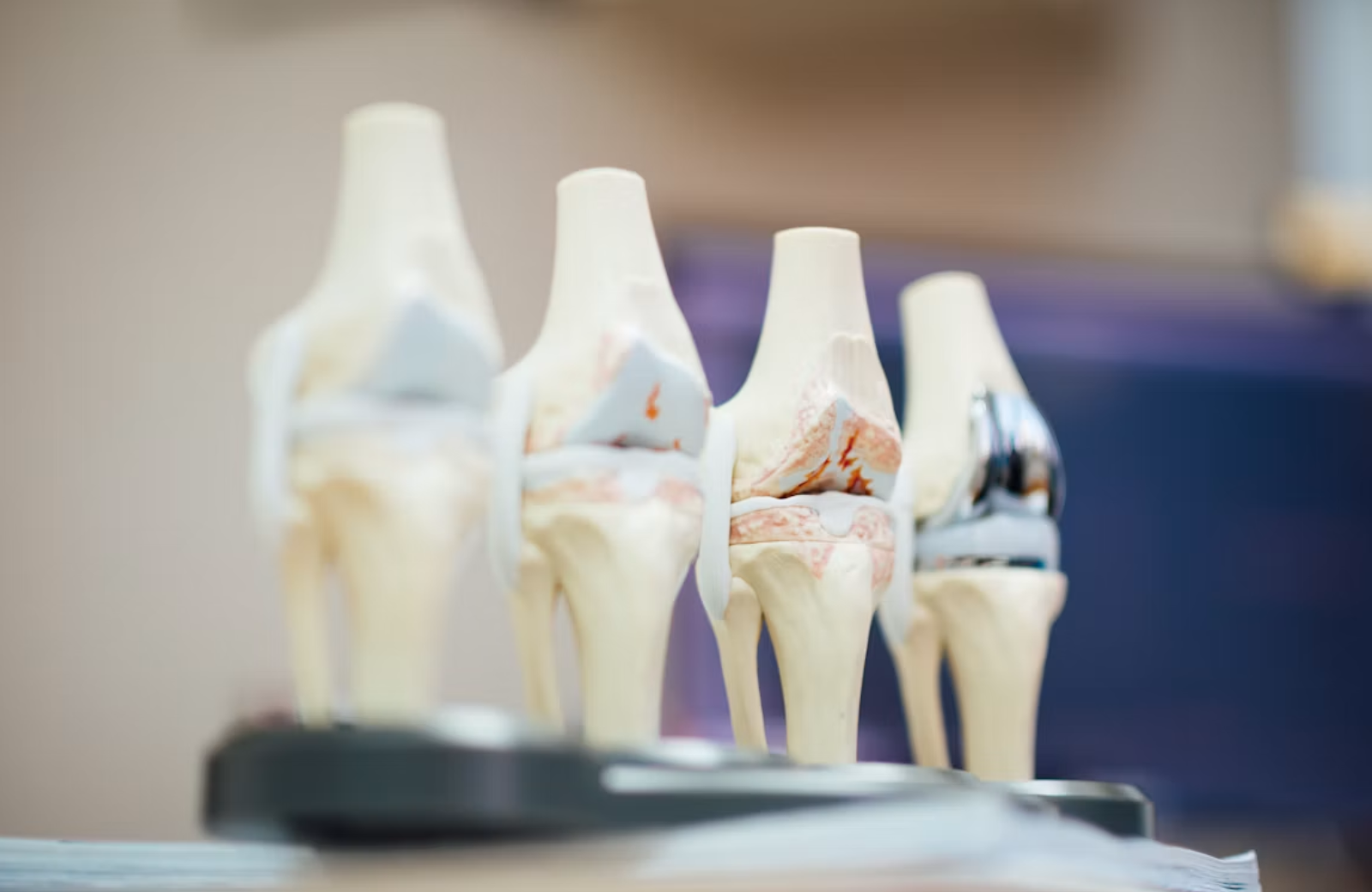
The classic sign is a pinpoint ache just below the kneecap that you can press on with one finger. Pain tends to be worst at the start of activity, eases a bit once you warm up, and then returns later or the next morning.
Watch for these common patterns:
- Pain at the bottom of the kneecap when you land from a jump
- Stiffness or aching when you stand up after sitting for a while
- Pain on stairs, especially going down
- Discomfort in deep squats, lunges, or the bottom of a clean or snatch
- A tendon that feels thicker or more tender than the other side
When Is It Something Else?
Not every pain around the kneecap is a tendon problem. Deep pain behind the kneecap, clicking with swelling, or a knee that gives way points toward other issues.
See a professional quickly if you notice sudden sharp pain with a pop, fast swelling, or trouble straightening your knee. Those signs can mean a more serious tendon or ligament injury.
Which Patellar Tendonitis Exercises Work Best?
The patellar tendonitis exercises with the strongest support are isometric holds, heavy slow resistance, and eccentric squats, followed by a gradual return to jumping. The key is progression, not any single magic move.
StatPearls describes a 2024 meta analysis that found eccentric, isometric, and heavy slow resistance training all effective. Programs that included isometric work or heavy slow resistance performed better than eccentric training alone.
Isometric Holds to Calm Pain
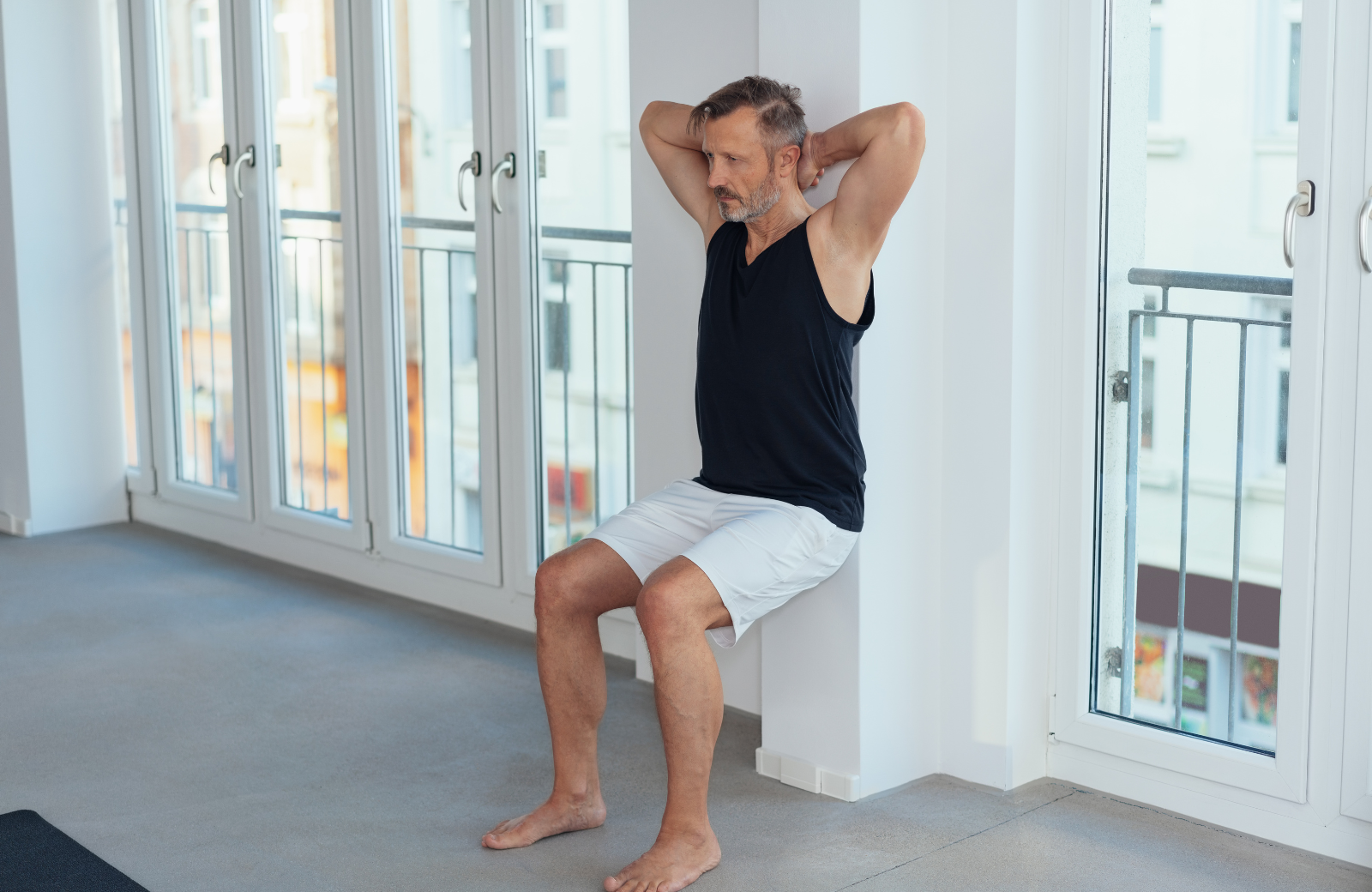
Isometric exercises mean you push or hold without moving the joint. They are a great starting point when your knee feels cranky, because they load the tendon while often easing pain for a short time.
Try these options:
- Wall sit: slide down a wall to a pain tolerable depth and hold for 30 to 45 seconds.
- Spanish squat: loop a strong band behind your knees, anchor it, and sit back into a supported squat.
- Leg extension hold: on a machine, hold the leg straight at a moderate effort for 30 to 45 seconds.
Aim for four to five holds, two or three times a day, at an effort that feels hard but not sharp. Rest about two minutes between holds.
Heavy Slow Resistance for Strength
Heavy slow resistance means lifting a challenging weight with a slow tempo, about three seconds up and three seconds down. This style builds tendon capacity and quad strength at the same time.
Good choices include:
- Leg press with both legs, then single leg
- Split squats with dumbbells
- Slow tempo back squats or box squats
- Knee extensions on a machine
Train this block three times a week with a day off between sessions. Start around three sets of 15 and slowly move toward heavier sets of six to eight as your knee allows.
StatPearls reports that heavy slow resistance works as well as eccentric training for pain and tendon remodeling. It also brought significantly higher patient satisfaction, which matters when you need to stick with a plan for months.
Eccentric Decline Squats
Eccentric exercises focus on the lowering phase of a movement. The classic version for jumper’s knee is a single leg squat on a 25 degree decline board, lowering slowly and pushing back up with both legs.
These can work well in the off season. StatPearls notes that volleyball players who did eccentric decline squats during the competitive season actually got worse, so timing matters.
Hip and Calf Strength Support the Knee
Your knee does not work alone. Weak hips and calves push more of the landing force into the patellar tendon.
Add these to your week:
- Side lying hip abduction or banded lateral walks
- Single leg Romanian deadlifts
- Standing calf raises, straight knee and bent knee
- Step downs with slow control
Energy Storage and Return to Jumping
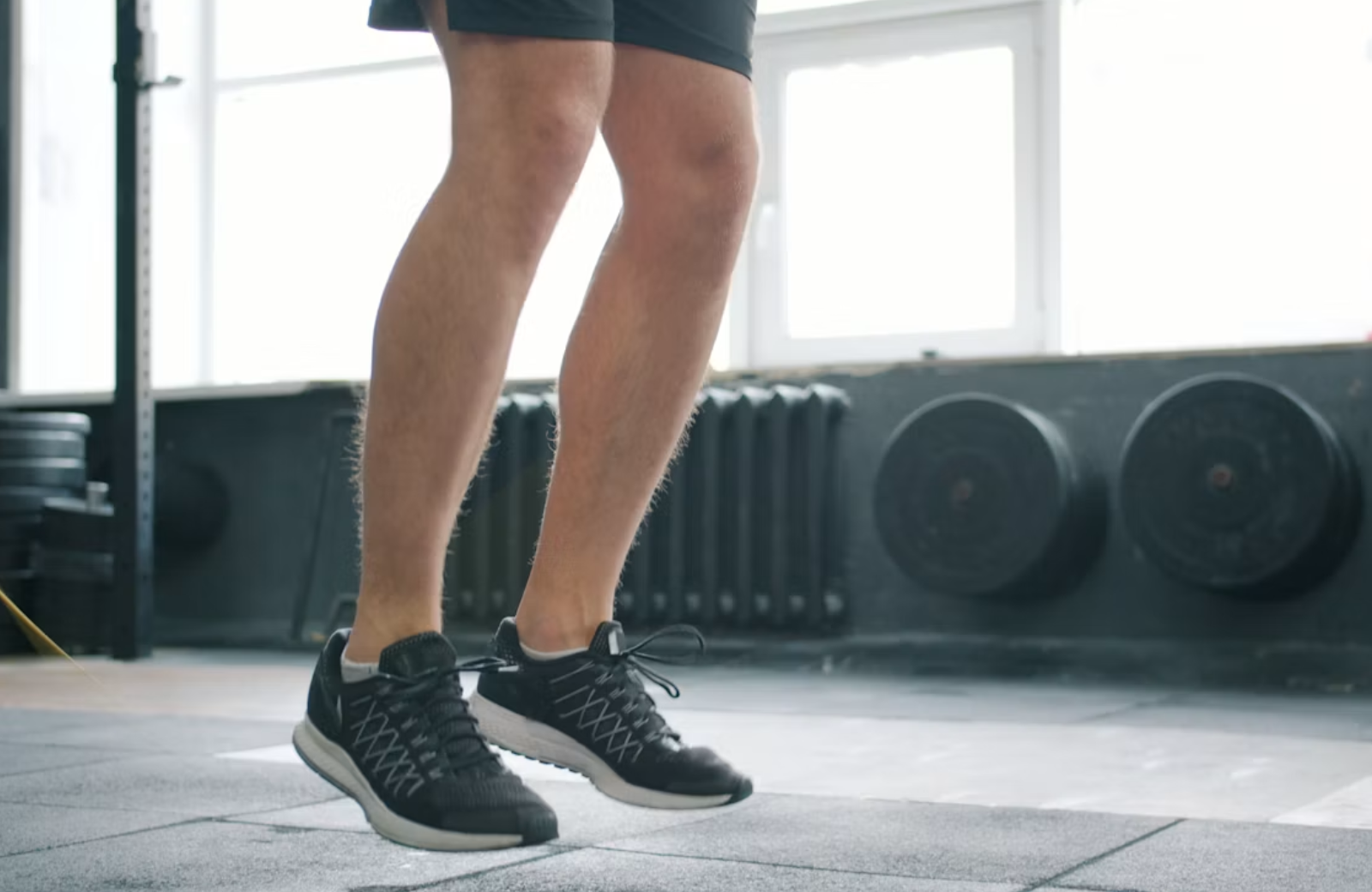
Once you can squat and press heavy weight with little pain, it is time to teach the tendon to act like a spring again. This phase covers the fast stretch and recoil that jumping requires.
Progress in this order:
- Low pogo hops in place
- Box jumps with a soft step down
- Broad jumps and lateral bounds
- Depth drops and landing drills
- Sport specific cutting, sprinting, and repeated jumps
Keep jump sessions two to three times a week, never on back to back days. The tendon needs about 48 hours to recover from fast, springy loading.
How Much Pain Is Okay During Tendon Exercises?
A little discomfort during tendon rehab is normal and often helpful. Most physical therapists use a simple rule: pain during exercise should stay at three out of ten or lower, and it should settle by the next morning.
Use this quick check after every session:
- During exercise, pain stays at three or lower out of ten.
- Right after, pain feels no worse than when you started.
- Next morning, your knee feels the same or better than the day before.
If you break any of these rules, drop the load or volume a notch for your next session. You do not need to stop entirely, you just need to find the right dose.
How Long Does Patellar Tendonitis Take to Heal?
Most people need about 12 weeks of consistent loading to feel a real change, and many take three to six months to fully return to jumping sports. Long standing cases can take longer, especially if you kept training through pain for months.
Research backs up the long view. In a JUMPER study secondary analysis in The American Journal of Sports Medicine, 76 athletes with patellar tendinopathy followed exercise therapy for 24 weeks, and their average VISA P score improved by 23 points.
That score is a standard measure of knee pain and function in jumping athletes. Steady improvement over six months is a normal and encouraging pattern, not a sign that the plan is failing.
A Phase by Phase Recovery Timeline
Use this table as a general guide. Your timeline depends on how long you have had symptoms, your sport, and how well your knee tolerates each step.
| Phase | Typical Weeks | Main Goal | Example Exercises |
|---|---|---|---|
| Calm the Pain | Weeks 1 to 2 | Reduce pain and keep moving | Wall sits, Spanish squats, leg extension holds |
| Build Strength | Weeks 3 to 8 | Grow tendon and quad capacity | Leg press, split squats, slow tempo squats |
| Add Speed | Weeks 8 to 12 | Restore spring and power | Pogo hops, box jumps, broad jumps |
| Return to Sport | Weeks 12 and beyond | Handle full training and games | Cutting, sprinting, depth drops, full practice |
What Makes Patellar Tendonitis Worse?
Sudden spikes in training load cause most flare ups. A new jump program, a tournament weekend, or a jump from three to six runs a week can all tip the tendon over its limit.
Other common culprits include:
- Complete rest followed by a fast return to full training
- Deep squats or lunges done through sharp pain every day
- Hard surfaces like concrete courts
- Skipping strength work once the pain fades
- Relying only on injections, massage, or braces instead of exercise
StatPearls also warns that leaning on passive treatments like shockwave or injections without rehab exercises can lead to poorer results. Those tools can help, but exercise stays the foundation.
Do Braces, Straps, and Other Treatments Help?
Patellar straps and tape can reduce pain during activity for some people, but they do not heal the tendon. Think of them as a short term comfort tool while your exercise plan does the real work.
Here is how common options compare:
| Treatment | What It Does | Best Use |
|---|---|---|
| Loading exercises | Rebuilds tendon capacity | Core of every plan |
| Patellar strap or tape | May ease pain during activity | Short term support in training |
| Focused shockwave therapy | Stimulates a healing response in stubborn tendons | Cases that stall after months of good rehab |
| Dry needling | Eases muscle tension around the knee | Helpful add on for tight quads and hips |
| Rest only | Lowers pain briefly | Rarely enough on its own |
According to StatPearls, shockwave can be considered when symptoms do not improve after six months of conservative care. In our experience, pairing it with a strong loading plan gives you the best of both.
When Should You See a Physical Therapist for Knee Pain?
See a physical therapist if your knee pain lasts more than two weeks, keeps returning, or limits your training. Early help usually means a shorter recovery and less time away from your sport.
A physical therapist can confirm the diagnosis, rule out other causes, and set the right starting dose for your tendon. We also look at how you jump, land, squat, and run, since small changes in mechanics can take pressure off the tendon.
You can learn more about our approach to knee pain physical therapy in Goodyear and how we match your rehab to your sport.
Frequently Asked Questions About Patellar Tendonitis Exercises
Should I stop exercising with patellar tendonitis?
No, most people should not stop completely. Stopping all activity weakens the tendon. Instead, reduce painful movements and replace them with isometric holds and strength work that keep pain at three out of ten or lower.
Is walking good for patellar tendonitis?
Yes, walking is usually fine and helps keep blood flowing to the area. If walking on flat ground hurts, your tendon is very irritated, and it is worth getting a professional evaluation.
Are squats bad for jumper’s knee?
Squats are not bad, but deep or fast squats can irritate a sore tendon. Start with supported or shallow squats at a slow tempo and increase depth and weight as your pain allows.
Can patellar tendonitis heal on its own?
Mild cases sometimes settle with a change in training, but many come back once you return to full activity. A structured loading program lowers the chance of the pain returning.
What is the fastest way to heal patellar tendonitis?
The fastest reliable path is consistent, progressive loading three times a week with smart limits on jumping volume. Skipping steps to hurry back is the most common reason recovery takes longer.
Should I ice my knee after exercise?
Ice can ease pain for a short time, and it is fine if it helps you feel better. It does not speed up tendon healing, so treat it as comfort rather than treatment.
How Can We Help You Get Back to Jumping and Running?
Patellar tendonitis responds best to a plan built around your knee, your sport, and your schedule. You do not have to guess at sets, reps, and when to start jumping again.
A Plan Built Around Your Sport
We start by finding out exactly what loads your tendon, whether that is volleyball, CrossFit, running, or pickleball. Then we build an exercise progression that keeps you training while your knee gets stronger.
We use tools like performance video analysis to see how you land and move. That way, we fix the habits that keep pushing extra load into your tendon.
Hands On Care When You Need It
Exercise leads the way, and hands on care can help you get through the tough early weeks. Depending on your case, we may add dry needling, soft tissue work, blood flow restriction training, or focused shockwave therapy.
Every tool has one goal. We want you moving, lifting, and jumping with confidence again.
Take the First Step Today
If your knee keeps nagging you, we are here to help. Visit our Goodyear knee pain physical therapy page to see how we treat knee pain from the ground up.
New patients can book a Free Total Body Diagnostic Session to find the real source of their pain. Call us at (623) 343 8706 or speak with a PT for a free call about your knee.
We proudly serve Goodyear, Avondale, Litchfield Park, Buckeye, and the West Valley. No surgery. No meds. Just movement.


